Winter driving tips for Cleveland
October 21, 2026
Lake-effect snow, black ice on bridges, braking gently, getting your car ready and what to do in a skid. Practical winter driving tips for Cleveland learners and parents.
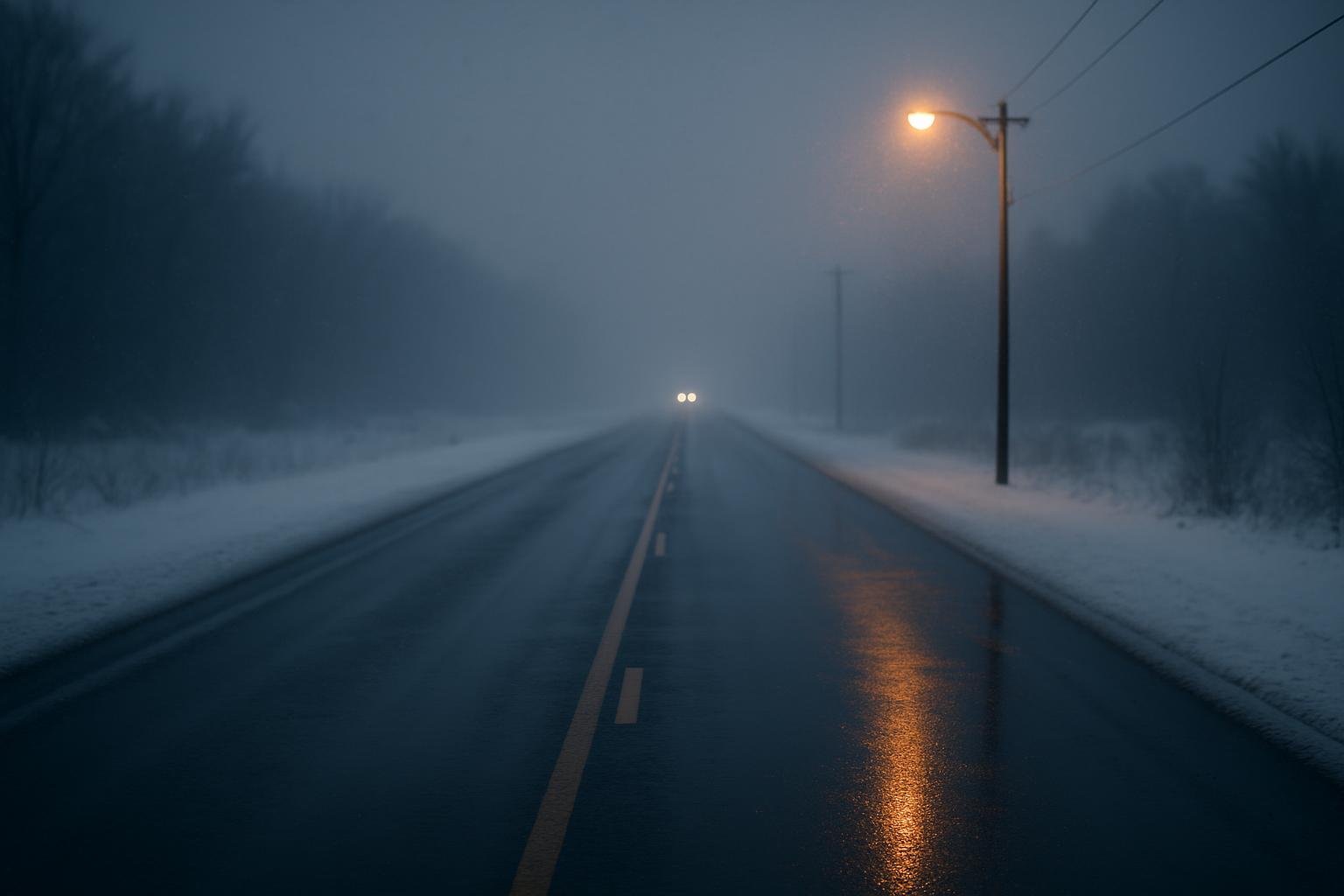
If you learned to drive in the summer, or you are a parent watching a teen get their first taste of a Cleveland winter, this one is for you. Nothing here is advanced. Winter driving is mostly the same skills you already have, done slower and smoother, with a car that is ready for the cold.
Lake-effect snow changes fast
Cold air moving over Lake Erie can drop snow in narrow bands. Conditions can change within a few minutes, and a clear road can turn into a whiteout without much warning. The difference between neighborhoods can be sharp too: the east side and the eastern suburbs often get more snow than the west side, so the road outside your door is not always the road you will meet ten miles away.
- Check the forecast and the radar before you leave, not only the temperature.
- If visibility drops suddenly, ease off the gas, turn on your headlights, and leave extra space. Do not slam the brakes.
- If you cannot see, slow down further and find a safe place to pull off the road when you can.
- Allow extra time. Rushing is what turns a slow commute into a bad one.
Bridges, overpasses and ramps freeze first
Bridges and overpasses lose heat from above and below, so they can freeze before the road around them. Ramps can do the same. A road that looks wet may be glazed with ice.
Black ice is the hardest to spot because it looks like plain wet pavement. Be most alert at dawn and after dusk, when temperatures dip. If the road ahead looks shiny and the cars in front seem to be moving oddly, treat it as ice. Slow down before the bridge, not on it, and keep the wheel steady across it.
Space, gentle inputs and how ABS feels
Everything takes longer on snow and ice, so give yourself more room.
- Following distance: open it up well beyond what you would leave on a dry day. If you are unsure, add more.
- Brake early and softly. Press smoothly and let the car slow down gradually.
- Steer smoothly. Sudden turns of the wheel can break the tires’ grip.
- Accelerate gently, so the wheels do not spin.
If your car has anti-lock brakes (ABS), you may feel a rapid pulsing in the brake pedal, hear a buzzing or grinding, and notice the pedal pushing back. That is the system working. Keep your foot pressed firmly on the pedal and steer where you want to go. Do not pump the brakes. It is a strange feeling the first time, which is a good reason to know about it before you need it.
Get the car ready
A few checks in autumn save a lot of trouble in January.
- Tires and tread. Tires are your only contact with the road. Check the tread and the pressure, since cold weather lowers pressure. Ask a tire shop whether your tires suit winter conditions, and see the Ohio BMV or ODOT for current rules and guidance.
- Wipers and washer fluid. Replace worn wiper blades and fill the reservoir with washer fluid rated for freezing temperatures. Plain water can freeze.
- Battery. Cold is hard on batteries. If yours is old or slow to start, have it tested before it fails.
- Clear the whole car. Brush snow and ice off the roof, hood, lights, mirrors and every window before you drive. Snow left on the roof can slide onto your windshield or fly off at the car behind you. Clear your headlights and taillights so others can see you.
- Fuel. Keep the tank well above empty in winter.
A simple winter emergency kit
Keep a small kit in the car, in the trunk or on the back seat floor:
- A phone charger or power bank
- A warm blanket, gloves, a hat and boots
- A flashlight with spare batteries
- An ice scraper and a snow brush
- A small shovel
- Jumper cables
- Water and a few snacks
- A bag of sand or cat litter for traction
If you ever get stuck, stay with the car, keep the tailpipe clear of snow, and call for help.
If you skid
It happens to experienced drivers too. The main idea is to stay calm and make small, smooth movements.
- Take your foot off the accelerator. Do not brake hard.
- Look where you want the car to go, and steer gently in that direction.
- Do not overcorrect. Big, fast steering makes it worse.
- Once the car regains grip, brake gently if you need to slow down.
The best fix is not to be going too fast in the first place. If a road feels slippery, it is.
When it is better not to drive
Some days the right choice is to stay home. If a storm is heavy, visibility is poor, or the roads have not been cleared, wait if you can. For a new driver, that is not a failure. It is good judgment. If you must travel, tell someone your route and when you expect to arrive, and check local road conditions first. For current laws and travel advisories, the Ohio BMV and ODOT are the places to look.
Practice before you need it
The safest time to learn how a car feels in poor conditions is with someone beside you. If you or your teen would like a calm, supervised session on winter driving or on the highway, we are happy to talk it through. See Lessons & Prices or book a lesson when you are ready. No pressure.
Not sure what you need?
Tell us how much driving you have done and what worries you about winter, and we will suggest where to start.
Book lessons